Thoughts and Ideas

  • Happy Autumn Equinox

    Happy Autumn Equinox

    I know it is a bit late for such post, it is 23 September already.

    I just was a bit buried under pile of work lately so did not had a moment for post like this. But today I found this video from Autumn Equinox and Baltic Unity Festival in Kernavė, Lithuania:

    https://www.reddit.com/r/BalticStates/s/JnvN0Ke9sK

    Fediverse reactions
  • JavaScript lacks it

    JavaScript lacks it

    I already hear screeches and screams from the crowd of people who praise JavaScript for being a bunch of human-readable text files.

    But yes, I feel that JavaScript lacks some “compiled” form of npm packages, with following properties:

    • single file per package, either in its library or executable form with strong distinction between the both.
    • Option to completely embed dependencies and deliver them inside of such file.
    • Make these files including embedded dependencies 100% preparsed and compiled into some “ready to link and execute” form, without need to spend on parsing, except may be some validation like “we can not assign to a const” or “we can not call a number, boolean, or other non-function stuff” or what generally speaking should be checked when e. g. a Class file (compiled Java file) loaded. But this would be something like “module” files, with references either from current package or fully qualified with package name
    scoped://namespace/library@1.2.5/path/to/module.js
    not-scoped://library@1.2.5/path/to/module.js
    this-package://modules/path/to/module.js

    But these strings are just readable references, internally it could be a list of per-compiled-file strings, with integer representations across compiled library or executable file.

    These references would be used to form binary” indications, like this:

    push bool true
    push fnref modules(155) exportedFunction
    call

    If we can represent this as kind of “arguments stack” machine.

    Or if we would represent this as classic stack frames, it would be like

    begin_call 1 # 1 argument expected
    load_arg_bool 0 true
    call fnref modules(155) exportedFunction

    Yes, this would be some sort of “dirty assembly” with most minimal set of instructions, as the nature of JS do not have too much ways to optimize that.

    Few instructions like that:

    • add operand_1_value operand_2_value receiver_ref – 2 arguments expected, do same as + operator, literally. Including String concatenation and auto-conversion
    • similar operations can be defined like substract, multiply, divide, pow and pow2 (with only 1 argument needed as second argument is already built-in. Also mod operation, and so on.
    • A set of unary operations can be plusify(+value) ,minusify (-value) or invert (!value) operations. Also increment and decrement deserves own commands.
    • alloc_local_vars n – allocate n local slots for variables of function, should be first instruction of method. n can be 0, if empty method or only receiver_ref of all such operations giving a result are discard_ref (see below).
    • labels_map label_expr1 label_expr2 label_expr3 would be second command of compiled function where list of position alias or position null for label without alias, where position is zero-based command index in the function body. If there is no labels in compiled function somehow, no_op command should be there.
    • set_local n value – set a local slot to value, where value can be a number, null, undefined, boolean, bigint, and so on, and value can be described in some const value_literal, local_ref n to reference other local value, arg n to reference arg of currently happening function call.
    • prop_get obj_value prop_name_value reciever_ref for reading member or indexer access, and so on where obj_value and prop_name_value are something that resolves together to receiver_ref = obj_value[prop_name_value] for property reading.
    • prop_set obj_value prop_name_value new_value is command to set the property like obj_value[prop_name_value] = new_value.
    • if condition_ref true_label false_label where condition_ref is something that can be used to get a value, like const value_literal , local_ref n or arg n and these true_label and false_label are created with special command.
    • label command marks this line by a name relevant to function scope, like label 1 some_alias or simply label 2 when it is not necessary to know or display in debugging the label name. The true_label and false_label are label_ref n expression or label_ref alias expression. Technically label is same as no_op command.
    • no_op well it just does nothing and can be used for empty code blocks, and at least no_op should be included into function body
    • the const_ref n would reference a constant, let it number or string, or other scalar value known at compile type, let it be property name, class name, a 0 in n > 0 expression or a string from template like "Hello ${name}".
    • undefined, null, true and false, as 0 and 1 are always known variants usable where expression should be, via const_ref null or const_ref true. Binary representations can have special bytecodes for such cases for const_ref true or const_ref false.
    • return value and return_void are return commands, where return_void is just more explicit analog of return const undefined. Returning from the topmost code of module would be an invalid operation.
    • call function_value receiver_ref would call a function, going into it, and return value would be assigned to value receiver, let it be local value, or object property reference prop_ref obj_value prop_name_value .
    • new_obj constructor_value receiver_ref would call a constructor with all that neuances and returned value would be assigned to receiver_ref which is same thing as for call command.
    • new_array length_value receiver_ref – allocates new array, usually with 0 length, what can be optimized with new_empty_array receiver_ref type of command
    • There is no such thing as ignored return value , technically it implemented by discard_ref what means a special value to be used for receiving of return values or results of other operations outcome of which never used.

    All this may not necessary be very detailed ultra-optimized instruction set, like 10-20 variants of add a b command, like add_int8 , add_uint32 or add_float64 with int8_to_float64 and other such conversion commands. This is not about replacing WebAssembly. It is about these two changes:

    • reduce size of node_modules
    • eliminate these post_install and pre_install scripts. The whole process of library installation into node_modules should consist of copying a library file into node_modules under special paths like @scope/library/compiled.jslibrary or library/compiled.jslibrary. This can include some check for semantic correctness, like do not use const undefined or const null as obj_value in prop_get or prop_set, or the label_ref should point to label declared in same function with label command, or never should use discard_ref as source of values.
    • Add support for libraries signing.
    • Allow to embed small, say less than 32 kb, (or optionally – all) dependencies into bullt library.
    • Speed up node applications startup
    • Allow to build single-file executables, or combination of launcher-file + main_app_library file.

    This would require changes at node_gcs, or at least custom loader for such libraries from modules, understanding these special imports.

    import {fancyFunction} from "scoped://libraries/@scope/library_name";
    import {fancyFunction as otherFancyFunction} from "non-scoped://libraries/library_name";

    For browser it would be something like

    import {fancyFunction} from "/assets/code_libraries/library.jslibrary";

    Or it would be

    <script type="js-library" src="/assets/code_libraries/library.jslibrary

    But this would require something like browser entry in the package.json and special markers in the header of library file.

    Whoa you read this far?

    Congratulations! You are at least a very-very patient person!

    What do you think about this idea of “binarized” JS libraries and executable files for JavaScript?

    I know there is WASM files and all that tooling with emscripten available, but this is not what I talking about, and it is impossible to point at WASM file as module or main or an NPM package, or load WASM file with <script src="/assets/scripts.wasm" type="webassembly" src_memory="/assets/default_mem.wmem" > , not speaking of access to window or worker context.

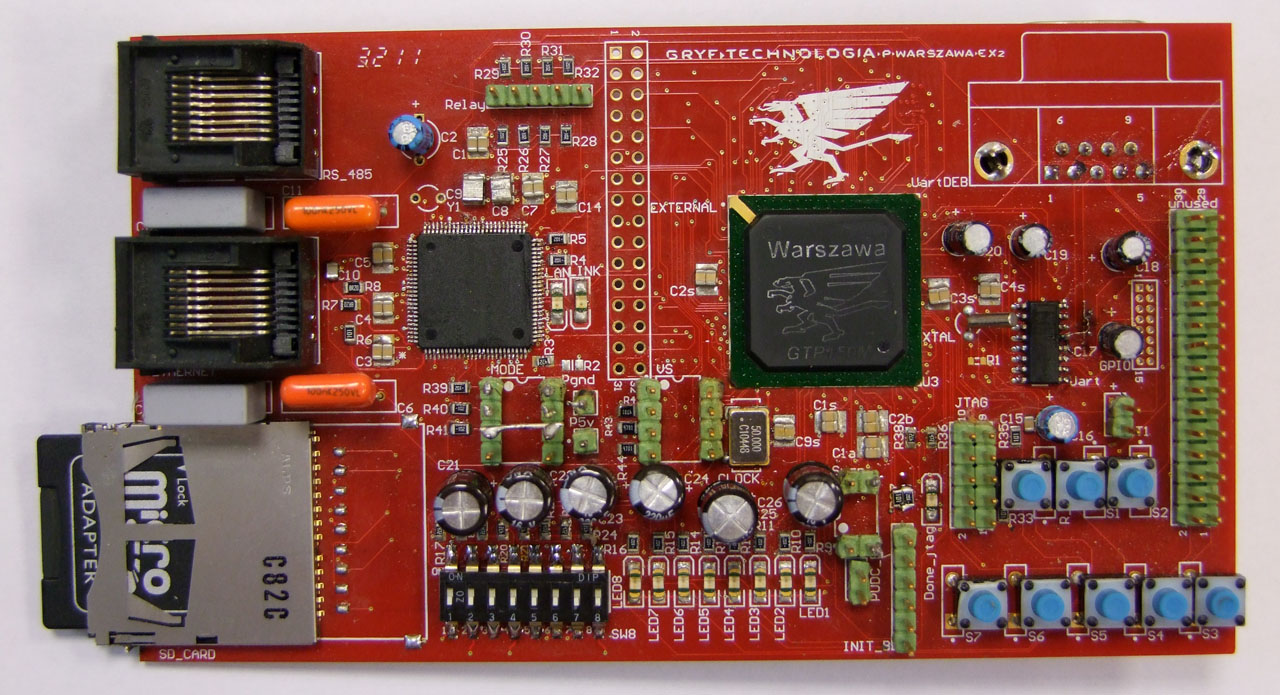
    PS: post illustration is photo of Java hardware processor made in Poland in 2011. Today I accidentally bumped into that example of computer archaeology looking for an illustration for this post

  • The reputation of United States

    Aral Balkan

    What if I were to tell you that Trump could knock any (or all) of over 20 million¹ European web sites off the Web tomorrow by picking up the phone to one US organisation: Let’s Encrypt.

    We desperately need an independent, not-for-profit ACME provider in the EU paid for by our taxes.

    CC @EUCommission

    ¹ This is just based on one firm’s analytics (trends.builtwith.com/websiteli). Others put LE use at 50-60% of all web sites.

    September 2, 2026, 10:11 356 boosts 336 favorites

    The whole idea that famous Let’s encrypt is some risk just because some voters were concerned so much about gas and groceries prices so much they elected a fascist bastard, is so…. “who could expect this 10-20 years ago?” thing.

    I bet Mozilla and Google would lobby the @EU_Commission against this important aspect of EU digital sovereignity.

    Yes, EU would need own certificates authority. But not because it is better than other centralized certificates authority. But because it would be easier and faster to do compared to transition to some decentralized alternative of internet where people exchange contacts like cards with addresses and phones in the past, and sites admins and authors add themselves in some well-respected human-reviewed catalogs of contact cards like “Yellow Pages”, as replacement for current pyramidal DNS & SSL certificates of today.

    I am not sure how is the best way to deal with all that, but it seems it would end need with some kind of that address/phone book for websites described in the Web Numbers article… But even without the central authorities of SSL.

    May be it would be something like that: If you are about to navigate into website, it depends on how it navigated:

    • from contact address book? Trust if same certificate as before.
    • from typing address in address bar or new certificate? Broadcast question for trust across peer to peer networks, something like “who trusts 1234:44444 declaring to be tasty.blog and certificate signature 12AB45DE3WXZ”?
    • Navigating to new website missing in known sites/contacts library from a known site? Ask known site for trust about site you navigate into the first time, or broadcast trust query, or both.

    If site or certificate is new, then it would be an UX quest to solve, to represent results of trust query to a non-techy person.. Of course if there are contacts that are trusting that hypothetical tasty.blog website, they can be shown in the related popup? But would it be some violation of their privacy to show that person, let it be Malory, the fact that Jane and Alex trust this website identity? Even if at UX level, “3 your contacts can confirm identity of this website”?

    Making all websites a sort of invite only, like “Mary gave you link to this tasty.blog website. Add it to your address book?”… Will it ever work?

    I know this would be completely new internet that is basically semi-compatible with standard one, and for today browser it would be similar to visiting first time a site with self-signed (or semi-self-signed with not-trusted root) certificate. Unless some extension would be created that would allow such kind of address-book kind of DNS & SSL functionality. But such extension of course would be incompatible even with old extensions APIs, and with newer more restricted too… And having some local proxy would end up with auto-transform of all links into

    //For site from your local address book
    https://127.0.19.45/from_book/site_name/page_path?a=1
    //for new site that is not in a book - ip address, port, and certificate hash
    https://127.0.19.45/new/1.99.11.15/443/AB444ZYC...3425/page_path?a=1

    I just tried to imagine how it (internet without centralized SSL and DNS but with these address books or Web Numbers) would look like without creating brand new browser, even with Servo rendering engine, using the browsers we already have.

    To some extent it resembles how the GNS (GNU Net domain name system) works?

  • The funny thing about these LLMs and llms.txt

    The https://llmstxt.org site described a technique that offers a way to make websites LLM-friendly. Well, preare it for reading and processing by some automated agent powered by LLM.
    So, one thing got my attention from related recommendations:

    • Use concise, clear language.
    • When linking to resources, include brief, informative descriptions.
    • Avoid ambiguous terms or unexplained jargon.

    So, we, humans, don’t deserve all this, and only LLMs deserve these practices? Does it mean the sites intended to be visited by people should be full of unclear wording, non-concise text? Full of rare jargon? And of course all that as a cherry on cake full of megabytes of javascript, wild and confusing navigation? And of course, hordes of useless and distracting ads, popups and all that crap?

    Fediverse reactions
  • It happens often

    What I do at work: something like “teamlead” job in a SaaS project where most often issues are related to “homegrown” billing via stripe or paypal or occasional issues with app-specific data storage.

    What I would like myself: code (not lead but code myself) a desktop local-first project I thinking about.

    What I use for job: complex build flow including webpack, SCSS, react, MUI4, typescript 5, et cetera.

    What I would use for my own project: vite, custom UI framework for custom elements based or tagged templates strings, and something for CSS files with “rules nesting syntax”. And regarding payments I would use the solution to accept payments that has the local bank.

    This strong difference gives me some strong dissatisfaction lately. I even thinking that I should create own local-first software projects as attempt to make some own income, not because I lack money for day to day expenses right now but because I feel I need to do my own things I want to do in my own way to be more satisfied.

  • Back from vacation travel to Estonia

    It was a week-long vacation trip for me and my wife.

    Before anything else I would like to thank community on Reddit who warned about need to fill a travel authorization form (even for transit!). it could be possible that without such hint I would not fill it at all and our vacation could become a sad thing instead.

    One of strongest impressions was is the most developed public transit system we seen in Tallinn.

    Trams are very good. We used them many times.

    Going beyond some “standard” travel landmarks was an improvisation and while we was not able to visit the place we wanted to see, we seen something else, and it was a good experience as whole.

    One of the most cute things seen was the signpost at Kaperi bus stop with directions to various places, from hairdresser to kindergarten. It gives some cute atmosphere that I can’t describe well. most close metaphor coming to mind is it like walking into a quest game about a small medieval village.

    The Elron trains are really good. I can say I dreamed to travel on an European train since last year, and during this travel that dream come true out of the blue, when we decided to travel to Tartu. Train interior design looks quite futuristic to my taste and I like it.

    Intercity buses are quite good, better than I expected. We took a bus from Tartu to Kaperi and than later continued to Võru.

    We wanted to visit the very specific place, Urvaste to see Tamme-Lauri oak, the oldest and widest oak of Estonia.

    The main lesson of this attempt was that visiting such places require a careful preparation beforehand. You can’t just sit in tram in Tallinn, travel with Elron train for hours, book a intercity bus to Võru direction, and catch a bus from Kaperi to Urvaste in the same day, as an internet search engine suggest. So, if we would be lucky enough to have another trip to Estonia, we would make the next attempt to see the Tamme-Lauri oak the main event to plan whole trip around, not just an impromptu.

    I would say you can not rely on internet regarding routes to and connections between cities and villages smaller than Võru and related connections. I feel there is some threshold that if you want to visit some “small” place, you have to not just plan beforehand carefully, but also research in more offline way if want to plan something like that.

    Speaking of trees… I have an impression after this vacation that there are so many trees and forests across Estonia, and this is great! It become one of main impressions from this travel.

    Tallinn also have much more greenery than Tbilisi, and combined with very developed public transit, it gives me some positive solarpunk-friendly feel. Speaking of solarpunk, yes, we seen a large set of solar panels at some place.

    The Viru hotel we stayed in has an own museum about soviet times and KGB. It is very interesting, but may be the narrator of this exhibition tells the story way too fast for my skills in aural English so I missed some moments of the story. Now I know some new details about these harsh and difficult times.

    One moment I was not expected that somehow Kiluvõileib was not so easy to bump into and we did not got a chance to taste it eventually. May be I “bumped into” wrong 4 places, or may be Gemini is not the best tool to ask questions like that, it seems.

    It was much easier with kama which was available at hotel breakfast and it is very tasty, really.

    We surely will visit Estonia again!

    Fediverse reactions
  • EU ID and Age Verification is so strange project

    Why this specification of age verification is so mobile-centric? Like, there are no options like these:

    • OTP via SM flow,
    • FIDO2 webauthn flows with TPM, Yubikey and other USB dongles with keystores and data signing capabilities
    • dedicated device with monochrome display, specialized EUID/Age Verification software preinstalled, and USB, NFC and Bluetooth interfaces, without any touch of Google or Apple

    The whole spec rotates only about just 2 flows:

    1. mobile device of quite specifc kind, with stock Android or iOS onboard, with age verification app installed.
    2. device from (1) used to scan via camera a QR code appearing on screen of the other device.

    I asked a related question to this spec here: https://github.com/eu-digital-identity-wallet/av-doc-technical-specification/discussions/62

    If find this relevant, and have GitHub account – boost that question please.

    (PS: already seen question there from people asking why ever GitHub used to store that spec)

    Fediverse reactions
  • Would you moved away from Express.JS to something like this?

    Imagine a library for node.js that would have been completely decoupled from raw server request and response?

    It may resemble koa a bit over its general vibe, I suppose.

    Instead of raw request and response, only minimal information for each request is provided, and access to to raw request and response avoided, with special hatches to use them when the above interface is not enough (the feature methods on request and responder objects).

    interface Request<TRouteParameters=Record<string,any>> {
       readonly id: string;
       method: string;
       url: string;
       host: string;
       query: ParsedQueryString;
       params:TRouteParameters;
       headers: RequestHeadersBag;
       cookies: RequestCookiesBag;
       contentLength: number;
       contentType: string;
       body: any;
       feature<T>(featureRef:RequestFeatureRef<T>):T;
       tryGetJson():Promise<any>;
       tryGetText():Promise<string>;
       tryGetBuffer():Promise<Buffer>;
       tryGeBodyStream: Readable;
    }
    
    interface Response {
       readonly statusCode: number;
       readonly headers: IResponseHeadersBag;
       readonly cookies: IResponseCookiesBag;
       readonly hasBody: boolean;
       execute(): Promise<void>;
    }  
    
    interface Responder
       readonly responded: boolean;
       status(status: number): Responder;
       setHeader(name:string, value:string):Responder;
       setCookie(cookie:CookieOptions):Responder;   
       
       next(): Promise<IResponse>;
       done(): IResponse;
       noContent() IResponse;
       redirect(url: string, reasonCode: RedirectReasonCode): IResponse;
       html(markup):IResponse;
       json(value:any):IResponse;
       stream(stream:Readable): Promise<IResponse>;
       feature<T>(featureRef:ResponseFeatureRef<T>):T;
    }   
    
    type RequestHandler = function(req:Request, res: Responder) => (Promise<Response>|Response|void);
    
    export type AfterRequestHandler = (req: Request, res:Response) => (Promise<void>|void);
    
    interface Routes {
       before(...handlers: RequestHandler[]): Routes;
       after(...afterHandler:AfterRequestHandler[]):Routes;
       use(path: RouteTemplateOrString, ...handlers: RequestHandler[]): Routes;   
       get(path: RouteTemplateOrString, ...handlers:RequestHandler): Routes;
       post(path: RouteTemplateOrString, ...handlers:RequestHandler): Routes;
       put(path: RouteTemplateOrString, ...handlers:RequestHandler): Routes;
       patch(path: RouteTemplateOrString, ...handlers:RequestHandler): Routes;
       delete(path: RouteTemplateOrString, ...handlers:RequestHandler): Routes;
       options(path: RouteTemplateOrString, ...handlers:RequestHandler): Routes;
       request(method:KnownHttpMethod, path: RouteTemplateOrString, ...handlers: RequestHandler): Routes;
       tryDispatch(request:Request):Promise<IResponse>;
       useRoutes(routes:Routes, prefix?:string):Routes;
    }
    
    //and something like this to use all that:
    export function createRoutes(): Routes;
    export function prepareForHttp(...routes: Routes[]): (req:IncomingMessage, res: ServerResponse) => void;
    
    export function prepareForHttp2(...routes: Routes[]): (req:Http2ServerRequest, res: Http2ServerResponse) => void;
    export function prepareMockRequest(options:MockRequestOptions):Request;
    export function enableRequestFeature<TFeature>(factory:(req:Request) => T): RequestFeatureRef<T>;
    export function enableResponseFeature<TFeature>(factory:(req:Request, res: Responder) => T):ResponseFeatureRef;
    
    export const RawHttp2Request = RequestFeatureRef<Http2ServerRequest>;
    
    export const RawHttp2Response = RequestFeatureRef<Http2ServerResponse>;
    
    export const RawHttp1Request = RequestFeatureRef<IncomingMessage>;
    
    export const RawHttp1Response = RequestFeatureRef<ServerResponse>;


    I defined the interface above while wrote this post.

    The reason for musing about this theoretical library is sort of being tired of not obvious ways to use same code without dirty hacks for http/1.1, http2, and tests.

    Would you use such library? Or there is such library already?

  • A newbie question about French law

    Or multiple questions. Does it mean I now have to check age of people who read my blog if their IP is within France range? Or if their language is French in user agent string? Or law demands browsers to send special digitally signed header of I am adult or I am minor kind? Does it apply to requests coming from Fediverse in behalf of accounts belonging to people this law applies to?

    Generally speaking, to what extent the age verification law like French one applicable to France?

    Fediverse reactions
  • Nihilism declared a form of extremism by law?

    Here is the headline sparked my question:

    Europol shuts down thousands of websites linked to global nihilist network

    https://www.brusselstimes.com/brussels-2/2244268/europol-shuts-down-thousands-of-websites-linked-to-global-nihilist-network

    The headline actually does not capture what the group actually did, according to article text:

    The groups recruit members through social media platforms and online gaming communities before encouraging them to commit acts including animal torture, violent assaults, self-harm and the production of child sexual abuse material.

    Note also another important detail (at least for me):

    Victims are often blackmailed into remaining in the groups, with perpetrators threatening to share intimate images or videos with family and friends.

    This sounds like how standard mafia or KGB/FSB works.

    Another notable aspect is this:

    Some of the groups also use far-right symbols and terminology to promote their ideology or provoke public outrage.

    I guess the more accurate headline could be like this: “Europol shuts down thousands of websites linked to global misantropic network that included far-right groups”.

    I also suspect that somehow Kremlin involved into this network. At least erosion of ethics worldwide is something Kremlin would find beneficial for their goal of world domination.

    PS: I am not a big fun of nihilism or misanthropy but so far I heard these words only related to philosophy books authors like Nietzsche or in internet whining about unpleasant life and being unlucky. With than being said, I never heard before it can end up with mafia-like behavior or end up becoming a destructive sects.